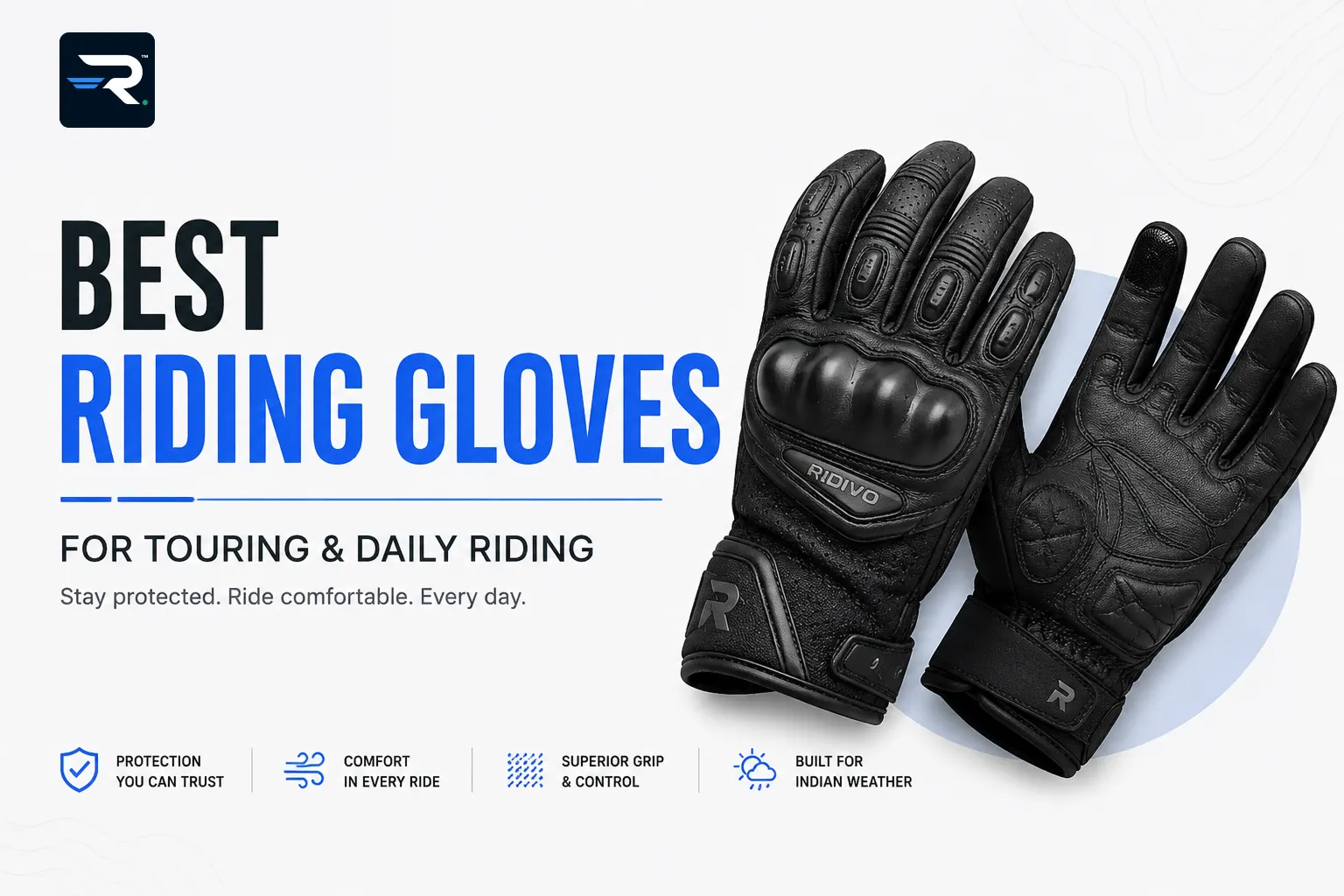
Best Riding Gloves for Touring and Daily Riding (July 2026)
Ridivo Team
·5 July 2026
Best Riding Gloves for Touring and Daily Riding (July 2026)
Your hands hit the ground first. That's the whole argument for a proper pair of riding gloves — not the grip, not the style, just the fact that in a fall, hands go down before anything else does. Yet gloves are usually the last thing riders buy and the first thing they skip on a "quick" ride.
This guide covers what actually matters in a riding glove for Indian conditions, and a shortlist of gloves worth considering across daily commuting, highway touring, and monsoon riding. If you're building out your full kit, it pairs well with our broader essential motorcycle riding gear guide.
Table of Contents
- Why Riding Gloves Matter
- What to Look For in a Riding Glove
- Types of Riding Gloves
- Best Riding Gloves for Touring and Daily Riding
- Riding Gloves by Use Case
- Common Mistakes Riders Make
- FAQs
Why Riding Gloves Matter
A slide at 30 km/h on tarmac does more damage to bare palms than most riders expect. Riding gloves aren't an accessory — they're the difference between a scraped knuckle and a fracture.
- Knuckle protection absorbs impact in a fall or a low-speed spill.
- Palm sliders stop your hand from grinding straight into the road.
- Abrasion resistance in the leather or textile keeps skin intact during a slide.
- Grip matters more than people think — sweaty palms on a hot commute make the throttle and brake lever less predictable, and gloves fix that.
- Hand fatigue on a long touring day is real; the right glove reduces vibration and grip strain over hours in the saddle.
What to Look For in a Riding Glove
For Indian weather and roads specifically, prioritize:
- CE certification — this is the only real proof of impact and abrasion protection, not marketing language.
- Ventilation / mesh construction — non-negotiable for city commutes and summer touring.
- Leather palm — better abrasion resistance and grip than pure textile.
- Wrist closure — a snug, adjustable strap keeps the glove from sliding off in a fall.
- Touchscreen compatible fingertips — small detail, genuinely useful for quick map checks at a signal.
- Short cuff vs gauntlet — short cuff gloves are easier for daily city riding; gauntlet gloves seal over your jacket sleeve for highway and monsoon riding.
Types of Riding Gloves
Summer / mesh gloves — built for airflow and lightweight daily wear. Best for city commutes and hot-weather touring, but offer less coverage in wet weather.
All-season touring gloves — a balance of ventilation and protection, usually gauntlet-style, built to handle a mix of highway stretches and unpredictable weather.
Waterproof / monsoon gloves — prioritize sealed seams and a snug gauntlet fit over airflow. Expect slightly warmer hands in exchange for staying dry.
Gloves are only one layer of the kit — pair them with the right riding jacket for Indian weather so your protection matches across the board, not just at the hands.
Best Riding Gloves for Touring and Daily Riding
| Glove | Best For | Approx. Price |
|---|---|---|
| Rynox Helium GT 2 | Daily commuting & summer | ₹2,150 |
| Royal Enfield Windstorm | Touring & highway | ₹2,600 |
| ViaTerra Holeshot | Daily + weekend rides | ₹3,500–4,000 |
| Rynox Air GT | Hot weather touring | ₹3,000–3,500 |
| Raida Aeroplex | Touring & protection | ₹4,500–5,000 |
| Rynox Storm Evo 3 | All-season touring | ₹4,500–5,000 |
| ViaTerra Kruger | Adventure & long-distance touring | ₹5,000–5,500 |
Prices are approximate and can vary depending on offers and retailers.
The Rynox Helium GT 2 is the easiest entry point — light, breathable, and built for a daily commute rather than long stints on the highway. The Royal Enfield Windstorm steps up slightly for touring use without a big jump in price. The ViaTerra Holeshot sits comfortably between daily and weekend use, while the Rynox Air GT leans into ventilation for riders touring through India's hotter months.
Once you're touring regularly, the Raida Aeroplex and Rynox Storm Evo 3 both offer stronger all-season protection, and the ViaTerra Kruger is built for riders logging real distance on adventure or long-haul routes.
Riding Gloves by Use Case
For daily city commuting
- Rynox Helium GT 2
- ViaTerra Holeshot
For highway touring
- Royal Enfield Windstorm
- Raida Aeroplex
For hot weather / summer riding
- Rynox Helium GT 2
- Rynox Air GT
For all-season touring
- Rynox Storm Evo 3
- ViaTerra Kruger
Best budget picks
- Rynox Helium GT 2
- Royal Enfield Windstorm
Best premium picks
- Rynox Storm Evo 3
- ViaTerra Kruger
A pre-ride checklist habit helps here — Ridivo's ride prep includes a gear checklist alongside route and pitstop planning, so gloves don't get left behind the way they often do on a "quick" ride. For a fuller rundown, see our motorcycle touring checklist.
Common Mistakes Riders Make
- Skipping gloves for short rides. Most falls happen close to home, not on the highway.
- Ignoring CE certification. A padded glove isn't the same as a certified one.
- Wrong sizing. A loose glove can slide off mid-fall; too tight, and it cuts circulation on long rides.
- Never replacing worn gear. Palm sliders and stitching wear down over time just like any other part of your bike — worth checking alongside your regular motorcycle maintenance checklist.
- Ignoring the wrist closure. An unsecured glove is one of the first things to come off in an impact.
- Buying only for looks. Style is fine, but protection and fit should decide the purchase, not the color.
The same logic applies to the rest of your gear — our helmet buying guide covers the same protection-over-looks trade-offs for the one piece of gear you can't compromise on.
FAQs
What are the best riding gloves under ₹3,000? The Rynox Helium GT 2 and Royal Enfield Windstorm both sit under or around this range and cover daily commuting and light touring well.
What are the best riding gloves under ₹5,000? The ViaTerra Holeshot, Rynox Air GT, and Raida Aeroplex all fall in this bracket and suit a mix of daily and touring use.
Are waterproof gloves necessary for monsoon riding? Yes, if you ride through the monsoon regularly. A sealed, gauntlet-style glove keeps hands dry and maintains grip when a mesh glove would leave you soaked and slipping on the levers.
Do daily commuters need CE certified gloves? It's worth it. Most falls happen in slow city traffic, not on the highway, and CE certification is the only reliable indicator that a glove will actually protect your hands in one.
Conclusion
Gloves are one of the cheapest upgrades to your riding gear and one of the most skipped. Whether you're commuting daily or planning a long touring weekend, pick a glove that matches how you actually ride — then wear it every single time, not just on the "long" rides. If you ride in a group, gear consistency across riders matters too — see our group riding safety guide for how to build that into your rides.
Ride smarter with your crew
Live tracking, SOS alerts, route planning — built for Indian motorcycle and cycling groups.
Join the waitlist