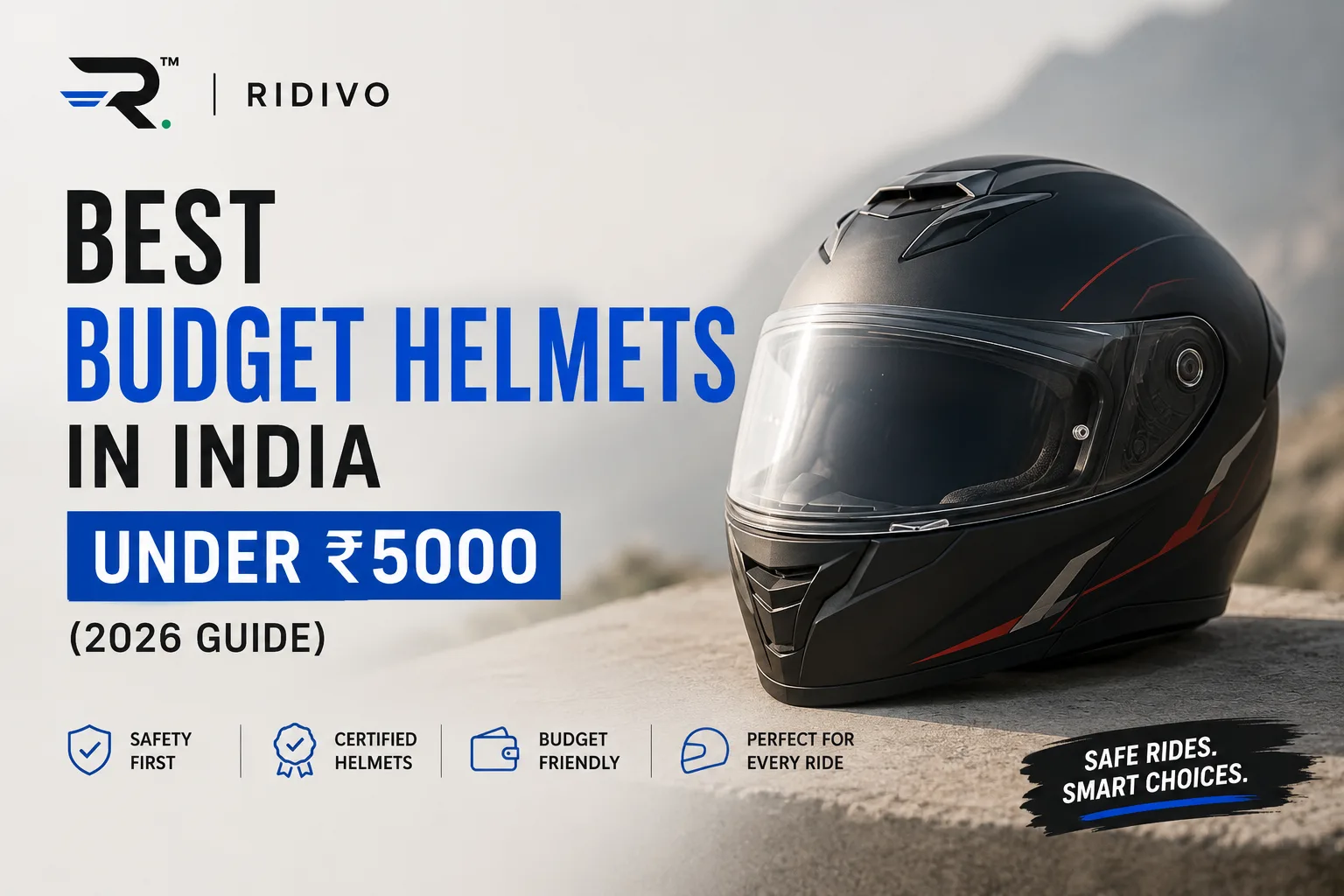
Best Budget Helmets in India Under ₹5000 (2026 Guide)
Ridivo Team
·15 July 2026
Best Budget Helmets in India Under ₹5000 (2026 Guide)
₹5,000 used to mean compromise — thin EPS, no real certification, a visor that fogged up the second the temperature dropped. That's changed. A handful of Indian brands now sell genuinely ECE 22.06-certified, full-face helmets well within that budget, which means you don't have to choose between affordability and a helmet that actually protects you.
A quick, important note before you read on: prices and even certification levels for these helmets vary by variant, color, and retailer, and they change often. Treat every number below as an approximate, current-as-of-writing range, not a fixed price — always check the certification sticker inside the helmet and the listing details before you buy.
Table of Contents
- Why Certification Matters More Than Price
- Helmet Comparison: Best Under ₹5000
- Best Helmet By Use Case
- What to Check Before You Buy
- Common Mistakes When Buying a Budget Helmet
- FAQs
Why Certification Matters More Than Price
Before comparing specific helmets, it helps to know what the certification stickers actually mean:
- ISI (IS 4151) — India's mandatory safety standard. Every helmet sold legally in India needs this.
- DOT (FMVSS 218) — the US standard, common on helmets sold globally, including in India.
- ECE 22.06 — the current European standard, and the most rigorous of the three. It's the newest revision and specifically tests rotational impact (the twisting forces on your brain during an angled crash), not just straight-on impact.
A helmet carrying all three is generally a stronger buy than one with ISI alone — but a genuine ISI-only helmet from an established brand is still a legitimate, legal helmet. Don't assume a helmet is unsafe just because it lacks ECE 22.06; do be wary of helmets with no visible certification at all.
Helmet Comparison: Best Under ₹5000
| Helmet | Type | Certification | Approx. Price* | Best For |
|---|---|---|---|---|
| Axor Apex | Full-face, dual visor | ECE 22.06, DOT, ISI | ~₹4,300–5,200 | Highway touring |
| SMK Stellar Sports | Full-face | ECE 22.06, DOT, ISI | ~₹4,200–4,800 | Daily + weekend rides |
| SMK Typhoon | Full-face, dual visor | ECE 22.06 (select variants), DOT, ISI | ~₹4,700–5,500 | All-weather touring |
| Steelbird SBH 61 SXE | Full-face | ISI, DOT | ~₹4,000–4,700 | Best overall value |
| Studds Helios | Full-face, dual visor | ISI, DOT | ~₹3,200–3,600 | Budget-conscious daily riders |
| Royal Enfield Spirit | Open-face | ISI, DOT | ~₹3,600–4,000 | Casual commuting (not for highway speeds) |
*Prices vary by color, variant, and retailer — check the current listing before buying. Royal Enfield Spirit is open-face, which means less coverage than the full-face helmets on this list; it suits slow city riding better than sustained highway speed.
Best Helmet By Use Case
A faster way to decide, if you already know how you ride:
- 🏆 Best overall helmet under ₹5,000: Axor Apex — the strongest all-round mix of certification, ventilation, and touring comfort
- 🛣️ Best for highway touring: Axor Apex or SMK Typhoon — both offer dual visors and ECE 22.06 variants for sustained speed
- 🏙️ Best for daily commuting: Studds Helios — budget-friendly with genuine ISI/DOT certification and anti-fog visor
- 🌧️ Best for all-weather riding: SMK Typhoon — Pinlock-ready visor system handles fog and rain better than single-visor options
- 💰 Best value for money: Steelbird SBH 61 SXE — full-face protection and ISI/DOT certification at one of the lowest prices on this list
- 🪶 Best lightweight helmet: Studds Helios — among the lighter full-face options here, useful for long rides
- 🆕 Best helmet for beginners: Steelbird SBH 61 SXE — genuine full-face protection without a steep price to start out
What to Check Before You Buy
Regardless of which helmet you pick, verify these before you pay:
- The certification sticker inside the shell — not just what the listing claims. Genuine ISI helmets carry a physical BIS mark.
- Shell material — ABS or EIRT thermoplastic shells are standard at this price point; that's normal and fine.
- Visor type — a Pinlock-ready visor matters far more in Indian monsoon and winter mornings than it sounds like it should. Fogging at 60 km/h is a real hazard, not a minor annoyance.
- Weight — most full-face helmets in this range sit around 1.4–1.6 kg. Heavier isn't automatically safer; it often just means more neck fatigue on long rides.
- Fit — a helmet that's technically ECE-certified but too loose for your head shape protects you less than a snug, well-fitted ISI helmet. Try it on if you can, and check the brand's size chart carefully if you're buying online.
Common Mistakes When Buying a Budget Helmet
- Buying on graphics alone — a striking paint job says nothing about the EPS liner underneath it.
- Assuming "under ₹5,000" means unsafe — several genuinely ECE 22.06-certified helmets sit comfortably in this range; you don't need to spend ₹10,000+ for real protection.
- Ignoring visor quality — a scratched or non-Pinlock visor on a rainy Bangalore morning is a visibility problem, not just a comfort one.
- Skipping the fit check — the best-rated helmet in the world doesn't help if it's a half-size too big.
- Forgetting it's disposable after impact — any helmet, however well-rated, needs replacing after a real crash, even if the shell looks undamaged.
If you're heading out with a group and someone's helmet is genuinely due for replacement, it's worth sorting gear before the ride, not after — Ridivo's pre-ride checklist lets a ride captain confirm everyone's basics, helmet included, before the group rolls out.
FAQs
Is an ECE 22.06 helmet worth it over ISI-only at this price? If your budget allows it, yes — ECE 22.06 tests rotational impact, which ISI alone doesn't. But a genuine ISI-certified helmet from an established brand is still a legal, legitimate choice, especially for city riding.
Which is the safest helmet under ₹5000 in India? Among full-face helmets carrying ECE 22.06, DOT, and ISI certification together — like the Axor Apex or SMK Typhoon — you're getting the most rigorous testing available at this price point.
Are open-face helmets safe enough for highway riding? Not ideally. Open-face helmets like the Royal Enfield Spirit protect less of your face and offer no chin-bar protection, which matters more at highway speeds. They're better suited to slower city commutes.
What's the difference between DOT and ECE 22.06 certification? DOT is the US standard and largely self-certified by manufacturers; ECE 22.06 is independently lab-tested by European authorities and includes rotational impact testing, which most riders consider the stricter standard.
Can a budget helmet be as safe as an expensive one? Yes, if it carries genuine certification. Price above the certified baseline often buys better ventilation, lighter shells, or premium finishes — not necessarily more protection.
Ride smarter with your crew
Live tracking, SOS alerts, route planning — built for Indian motorcycle and cycling groups.
Join the waitlist